
Rosacea Treatment in Walnut Creek
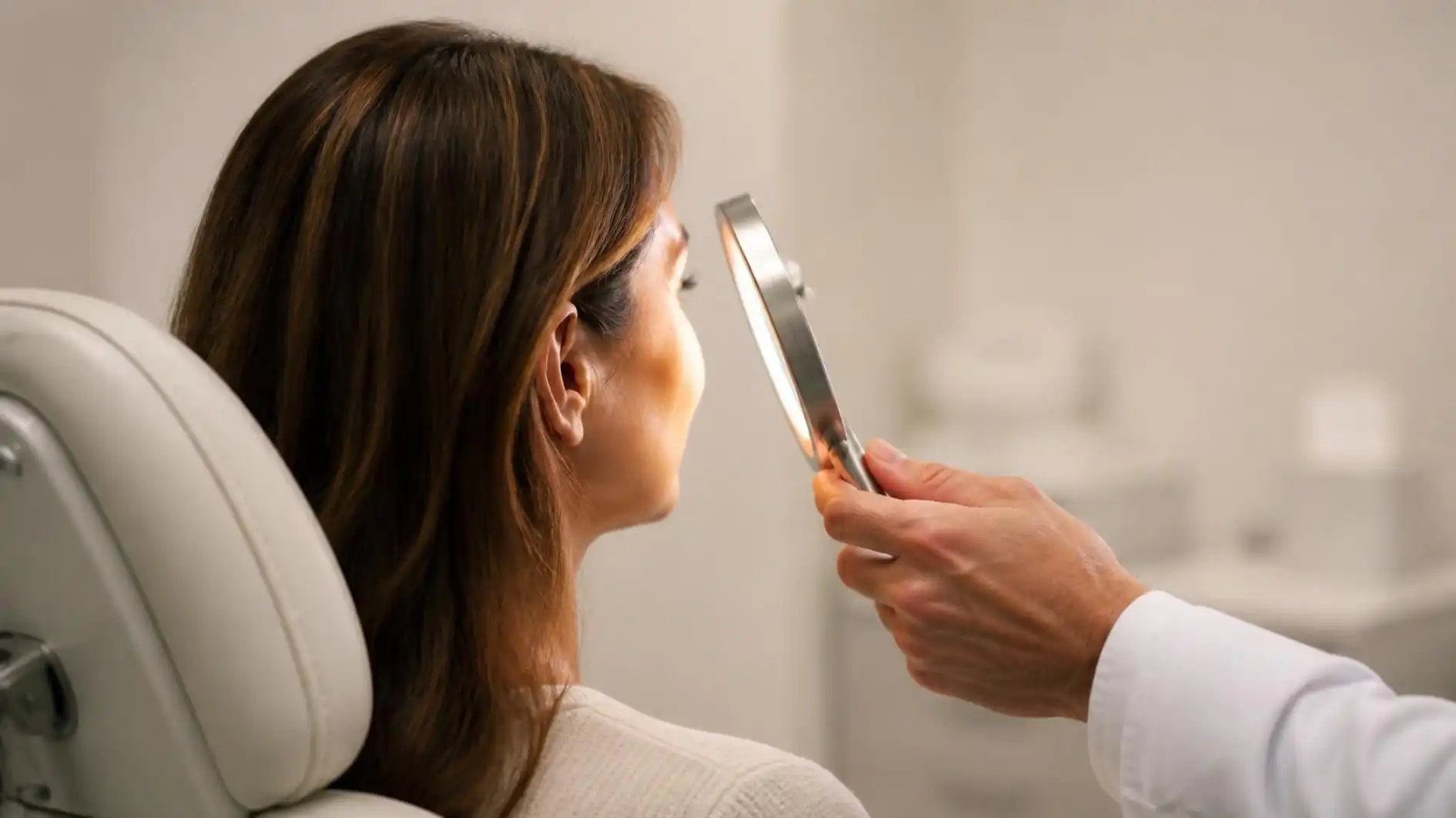
Rosacea is a condition to manage over time rather than to treat once. The plan depends on how it shows up on your skin. I use prescription creams, IPL, oral medication, skincare and, in some cases, laser resurfacing, in whichever order suits you. We start with a consultation. We decide together where to begin. If your rosacea does not respond, I will say so and refer you to a specialist.
23+ YEARS EXPERIENCE | BOARD CERTIFIED MD | FORMER ASST. PROFESSOR OF MEDICINE | 5.0★ ACROSS 136 REVIEWS
How I Treat Rosacea
These are the tools I work with. Which ones we use, and in what order, depends on my evaluation of your skin and on what you prefer.
- Prescription creams and gels
- IPL, for redness and visible vessels —
- Oral medication, where it is needed
- Skincare suited to rosacea-prone skin
- Erbium laser resurfacing, in selected cases —
There is no fixed ladder. Some people do well on a cream alone; others need light treatment for the vessels that creams cannot reach.
What a Plan Usually Looks Like
- A consultation, where I look at your skin and hear what triggers your flares.
- A plan of care, which usually starts with prescription creams and IPL.
- If there is no improvement, we look at diet, which I cover in my article on gut health and rosacea, and whether changing it helps.
- If there is still no improvement, I refer you for a biopsy to confirm the diagnosis, and to a specialist if the rosacea resists treatment.
"Usually" is the honest word. The order changes with your skin and with what you are willing to do. We settle it together.
What Rosacea Is
Rosacea (roe-ZAY-she-uh) is a common skin condition that causes redness and visible blood vessels in your face. It may also produce small, red, sometimes pus-filled bumps. Rosacea is a relapsing skin condition that may flare up for weeks to months and then resolve for a while.
What Causes Rosacea?
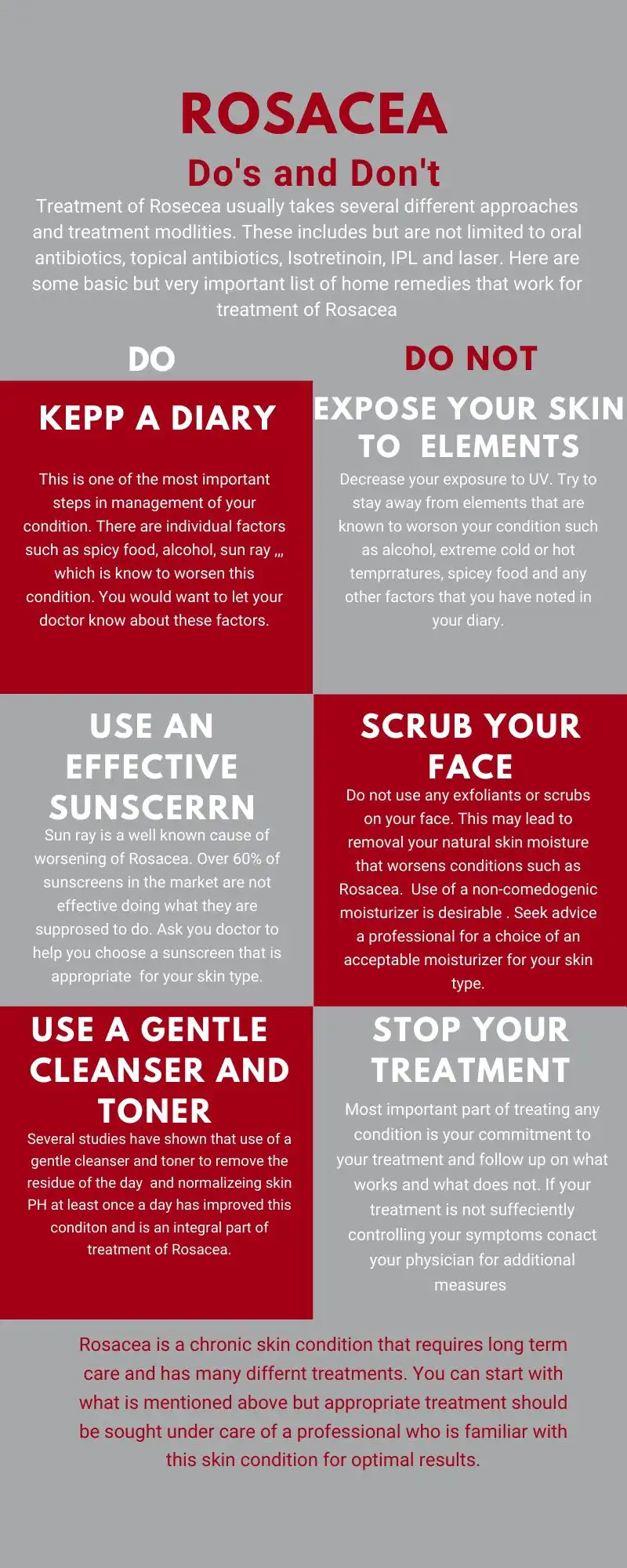
Rosacea causes are still unclear. We know that many environmental and internal factors have been shown to stimulate an exaggerated abnormal immune and vascular response. There is convincing evidence that elements such as germs, ultraviolet (UV) radiation, nutrition, extreme temperatures, (skin) barrier disruption, psychosocial stress, and hormones may produce an exaggerated immune response leading to an abnormal neurologic and vascular regulation that can lead to redness and other skin manifestations of this condition.
The Types of Rosacea
Based on the look, type and area of involvement, rosacea is generally classified into four major subtypes:
Erythematotelangiectatic:
Erythematotelangiectatic rosacea is characterized by a transient facial redness (flushing), combined with a background of persistent redness in the center of the face associated with spider veins also present in most patients.
Papulopustular:
Papulopustular rosacea presents with variable intensity of central facial redness and a variable number of small red raised lesions looking like a pimple occasionally containing pus.
Ocular:
Ocular rosacea(involving the eyes) consist of dryness, gritty sensations, tearing, itching, as well as frequent styes. More serious cases of ocular rosacea presents as inflammation of the eyelids, often with conjunctival redness, lid margin spider veins, and sty formation. Treatments that help include prescription eye ointments or drops, oral antibiotics and daily eyelid hygiene, and I can start these. I refer you to an ophthalmologist if your symptoms do not improve, if your eyesight could be affected, or when another cause needs to be ruled out — rare complications can threaten vision, and an eye specialist is the right person to prevent them.
Phymatous:
Phymatous rosacea is a thickening of the skin, with an irregular, bumpy surface and enlargement of the affected area. It most often affects the nose, where it is called rhinophyma, but can also involve the chin, forehead, cheeks or ears. It is the least common type, seen in about 7 in 100 people with rosacea, and more often in men. I do not treat phymatous rosacea; when I see it, I refer you to a specialist.
Many people have features of more than one type, and the type can change over time.
The Treatments, in Detail
Because of the diverse presentations of rosacea, approaches to treatment must be individualized based on the disease severity, quality-of-life implications, comorbidities, trigger factors, and the patient’s commitment to therapy and patient’s preferred mode of treatment. Rosacea treatment can be delivered by systemic (oral medications), topical such as gels, creams or light based treatments such as IPL (Intense pulse light). As a general rule appropriate general skin care for your skin type will decrease the number of episodic occurrences.
For the reader who wants the detail behind the plan above.
Topical treatments:
Use of topical treatments such as gels and creams is the treatment of choice in case of mild to moderate rosacea. Metronidazole 0.75% (gel, cream, and lotion; twice-daily application), metronidazole 1% (gel and cream; once-daily), azelaic acid 15% gel (twice-daily), and ivermectin 1% cream (once-daily application) are all accepted first line treatments. They are FDA approved and are generally well tolerated by most patients. Some studies show better response to topical ivermectin compared to metronidazole for papulopustular rosacea.
Brimonidine tartrate 0.33% gel (once-daily application) was approved by the FDA as the first line treatment for the topical treatment of persistent facial redness associated with rosacea. Brimonidine gel can decrease blood flow to the small vessels under the skin, leading to decreased skin redness in the majority of patients.
Systemic treatments:
Tetracycline and doxycycline in different doses have been widely used as oral treatment. Currently the only FDA approved oral treatment of Rosacea is a form of modified-release doxycycline (30 mg immediate release and 10mg slow release). In patients who are allergic to tetracyclines, Azithromycin has been used as an alternative although the data on use of this medication is limited.
In more severe cases of Rosacea usually with papulopustular manifestations oral Isotretinoin (widely known as Accutane) is indicated however it is associated with a higher relapse rate after discontinuation of the treatment.
Physical Treatments:
Reduction in telangiectasia (spider veins are dilated small vessels under the skin) is not to be expected with any of the topical agents for rosacea. Destruction of dilated vessels by vascular lasers or intense pulse light (IPL) is the primary therapy to reduce telangiectasia. Light energy is absorbed by red blood cells in the vessels under the skin, leading to vessel heating and destruction. Intense pulse light (IPL) devices are the most commonly used treatment of redness and telangiectasia (spider veins) in rosacea patients.
Fees
All medications — creams, gels and oral — are prescriptions, filled at a pharmacy. IPL is priced per session: partial face (such as cheeks and nose) $175, full face $300, face and neck $425; five sessions for the price of four. The consultation is $150, waived if you proceed with treatment. Prices current as of October 2026.
Rosacea Questions
What Clients Say












Ready to Talk About Your Rosacea?
Book a consultation, or call the office if you would like to talk it through first. We will look at your skin together, work out what is driving the flares, and agree on where to start.
Explore our full range of skin rejuvenation treatments.
Reviewed and approved by Kourosh Moazemi, MD, FACP, board certified in Internal Medicine. Last reviewed August 31, 2026.