
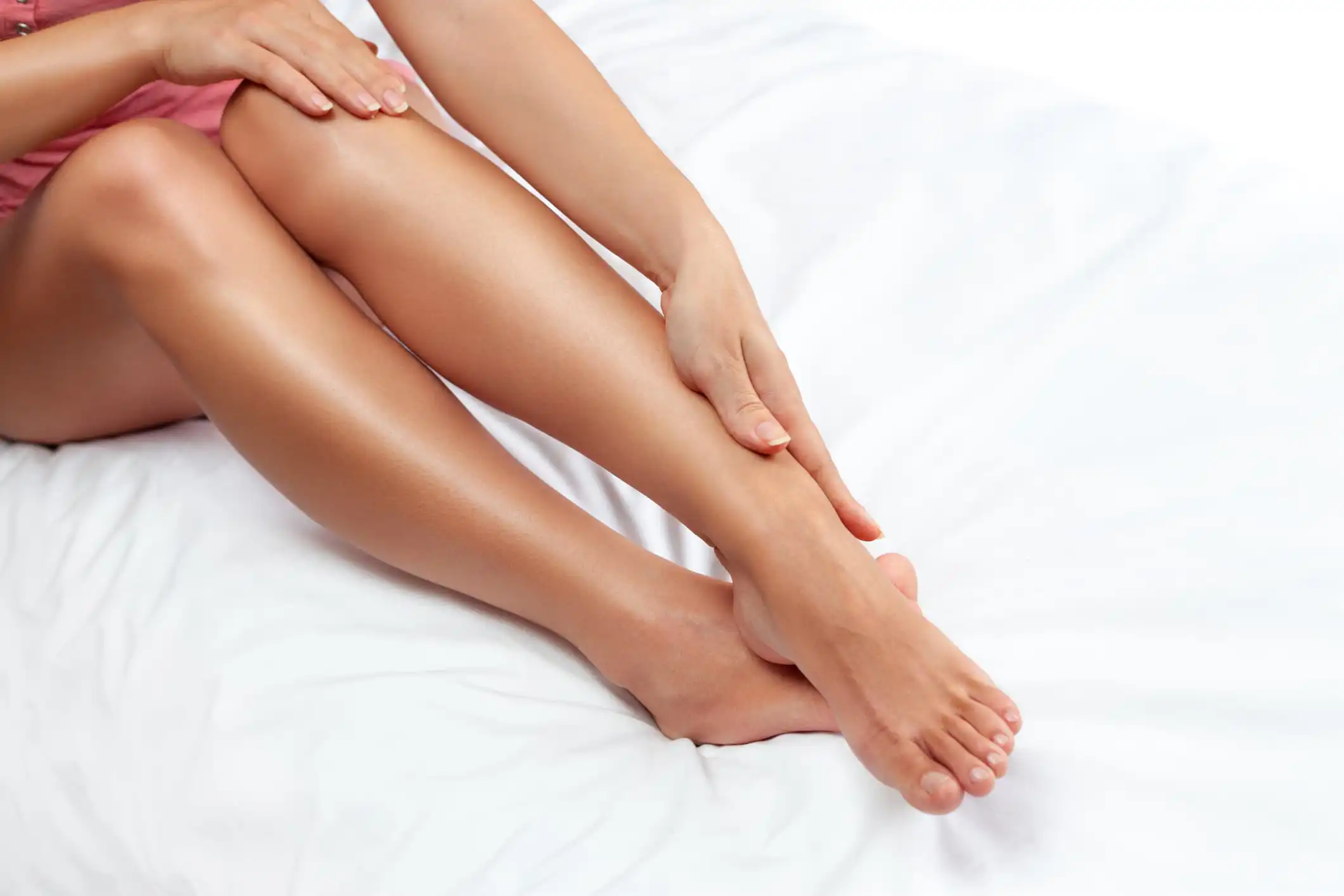
Laser Hair Removal Aftercare Instructions
These are my pre-care and laser hair removal aftercare instructions. Following them carefully gives you the most effective, comfortable, and safe treatment and lowers the risk of side effects such as burns, blistering, or changes in skin color. Please read them before your first session and keep them handy between sessions. If anything is unclear, call the office before your appointment.
23+ YEARS EXPERIENCE | BOARD CERTIFIED MD | FORMER ASST. PROFESSOR OF MEDICINE | 5.0★ ACROSS 136 REVIEWS
About the Procedure
Laser hair removal uses focused light to target the pigment (melanin) in your hair follicles, heating and disabling them so hair grows back more slowly, more finely, and eventually much less. Because only actively growing hairs respond, several sessions — usually spaced about 4 to 6 weeks apart — are needed for the best result.
Before Your Treatment
Before your first session
- Tell me if you are pregnant or breastfeeding, have a history of keloids or thick (hypertrophic) scars, have an active skin infection, rash, or open wound in the area, or have a history of cold sores (herpes) near the treatment site.
- Report all medications and supplements, especially isotretinoin (for acne), antibiotics, medications that make you sensitive to light, and blood thinners.
- Mention any history of easy pigment changes, cold sores, epilepsy or seizures, or prior reactions to laser treatments. If you get cold sores in the area to be treated, I may prescribe an antiviral medication to take beforehand.
Four weeks before
- Stay out of the sun and avoid tanning beds and self-tanning products for at least 3 to 4 weeks before your appointment. Tanned or recently sun-exposed skin has more pigment in the surface layers, which raises the risk of burns, blistering, and lasting changes in skin color.
- Apply a broad-spectrum sunscreen (SPF 30 or higher) every day to the area to be treated when outdoors, and cover the skin with clothing when possible.
- Do not wax, pluck, thread, or use epilators — or any method that pulls the hair out by the root — for at least 4 weeks before treatment. The laser needs an intact hair follicle with its root and pigment to work.
- Shaving and trimming are fine and are the only hair removal methods you should use before and between sessions, because they leave the root in place.
- If you develop a sunburn or a new tan in the treatment area, your session may need to be rescheduled.
One to two days before
- Shave the treatment area about 24 to 48 hours before your appointment, unless I give you different instructions. This clears surface hair — so the laser energy goes to the follicle rather than burning hair on the skin — while leaving a tiny amount of stubble that helps us see the follicles.
The day of your treatment
- Arrive with clean, dry skin. Do not apply lotions, deodorant, perfume, or makeup to the treatment area on the day of your appointment.
- Expect a warm, snapping or stinging sensation with each pulse. A cooling device, cool air, or cool gel is often used to protect your skin and improve comfort, and a numbing cream may be offered for sensitive areas.
- Protective eyewear will be provided — keep it on for the entire session.
- Mild redness and slight swelling around the hair follicles (looking a bit like goosebumps) are normal and expected, and usually settle within hours to a day or two.
After Your Treatment
The treated skin may feel warm and look pink for a short time, like a mild sunburn. The steps below keep the area comfortable while it settles and lower the risk of dark or light spots forming as the skin recovers.
First 24 to 48 hours
Do
Do Not
The next three to four weeks
- Sun avoidance is just as important after treatment as before. Avoid direct sun and tanning for at least 3 to 4 weeks.
- Apply broad-spectrum sunscreen (SPF 30 or higher) daily to the treated area whenever it may be exposed to light, and cover the skin with clothing when possible. This lowers the risk of dark or light spots forming while the skin recovers.
Between sessions
- In the 1 to 3 weeks after treatment, treated hairs will shed. You can gently exfoliate or wipe with a damp cloth to help this along — do not pluck or wax.
- Shave or trim only between sessions. Do not wax, pluck, thread, or epilate.
- Keep every scheduled session and the spacing I advise — consistency is key to good results.
- Keep protecting the skin from the sun throughout your treatment course and afterward.
- Tell me about any side effects at your next visit so I can adjust the settings to keep your treatments safe and effective.
What to Expect and What Is Normal
Redness, mild swelling, and a warm or tender feeling around the follicles are normal for a few hours up to a couple of days. The skin may look slightly pink or feel like a mild sunburn for a short time.
Hair does not fall out immediately. Over the following days to a couple of weeks, treated hairs shed — this can look like new growth but is actually the hairs being pushed out.
Multiple sessions are required, and results build gradually. Naturally blonde, red, gray, or white hairs contain little pigment and respond poorly or not at all to the laser.
Call Us If You Notice
Call the office at (415) 644-8301 if you notice:
- Blistering, open sores, or skin that breaks down
- Increasing pain, redness, warmth, swelling, or any pus or discharge — these can signal an infection
- Crusting or scabbing that worsens, or new dark or light patches of skin
- A cold sore outbreak in the treated area
- Any reaction that seems severe or is not improving
For blistering or broken skin, I may recommend an antibiotic ointment to prevent infection — use only what is recommended for you.
Laser Hair Removal Care FAQs
Questions About Your Laser Hair Removal Care?
Keep these instructions for reference throughout your treatment course, and do not hesitate to call the office with any questions. Your comfort, safety, and result are the priority at every session.
Reviewed and approved by Kourosh Moazemi, MD, FACP, board certified in Internal Medicine. Last reviewed September 9, 2026.